Electronic music has transformed from an experimental genre into a dominant force in the global music scene. This genre’s evolution reflects technological advancements and shifting cultural trends, making it a vibrant and ever-evolving part of the music industry. Here’s a comprehensive look at how electronic music has evolved and its impact on contemporary sounds.
1. Origins and Early Development
Electronic music’s origins trace back to the early 20th century with the advent of electronic instruments and experimental sound exploration. Early pioneers like Karlheinz Stockhausen and Pierre Schaeffer used tape machines and synthesizers to create groundbreaking compositions that laid the groundwork for future electronic music.
- Key Developments: Early synthesizers, tape manipulation, musique concrète.
- Pioneers: Karlheinz Stockhausen, Pierre Schaeffer.
2. The Rise of Synthesizers and Drum Machines
The 1970s and 1980s saw the rise of synthesizers and drum machines, which revolutionized electronic music production. Instruments such as the Moog synthesizer and Roland TR-808 drum machine became iconic tools for musicians, giving rise to genres like disco, techno, and electro.
- Instruments: Moog synthesizer, Roland TR-808.
- Influential Genres: Disco, techno, electro.
- Artists: Kraftwerk, Giorgio Moroder.
3. The Birth of Rave and Dance Music
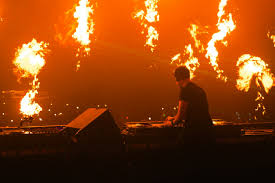
The late 1980s and early 1990s witnessed the explosion of rave culture and electronic dance music (EDM). The proliferation of electronic music clubs and festivals helped popularize genres like house, trance, and drum and bass. This era marked a significant shift as electronic music moved from niche underground scenes to mainstream popularity.
- Genres: House, trance, drum and bass.
- Cultural Impact: Rave parties, music festivals.
- Artists: Daft Punk, The Prodigy.
4. The Digital Revolution and Mainstream Success
The 2000s brought the digital revolution, which transformed electronic music production and distribution. Software synthesizers, digital audio workstations (DAWs), and online platforms made it easier for artists to produce and share their music. This era also saw the rise of big room house and dubstep, which dominated the charts and festival scenes.
- Technologies: Software synthesizers, DAWs.
- Genres: Big room house, dubstep.
- Artists: Calvin Harris, Skrillex.
5. The Modern Era: Fusion and Innovation
Today, electronic music continues to evolve, incorporating elements from various genres and cultural influences. Modern electronic music features a blend of genres, including future bass, lo-fi hip-hop, and experimental electronic. Innovations in sound design, collaboration across genres, and new performance technologies keep pushing the boundaries of electronic music.
- Genres: Future bass, lo-fi hip-hop, experimental electronic.
- Trends: Genre-blending, innovative sound design.
- Artists: Flume, Billie Eilish.
6. The Future of Electronic Music
Looking ahead, the future of electronic music promises continued innovation and diversification. Emerging technologies like artificial intelligence, virtual reality, and advanced sound synthesis are expected to shape the next wave of electronic music. As artists experiment with new tools and sounds, electronic music will likely continue to redefine itself and influence other genres.
- Technologies: Artificial intelligence, virtual reality.
- Trends: Advanced sound synthesis, interactive performances.
- Predictions: Further genre fusion, technological integration.
Conclusion
The evolution of electronic music showcases its adaptability and ongoing influence within the music industry. From its experimental beginnings to its current status as a global phenomenon, electronic music has continually transformed and innovated. As we look to the future, it’s clear that electronic music will continue to shape and be shaped by new technologies and cultural trends. For more insights into the evolution of electronic music, visit MDL Beast’s guide.