The global blockchain industry is entering a more disciplined phase of development. After years of rapid experimentation and speculative expansion, the focus is increasingly shifting toward infrastructure, regulatory alignment, and real-world economic integration.
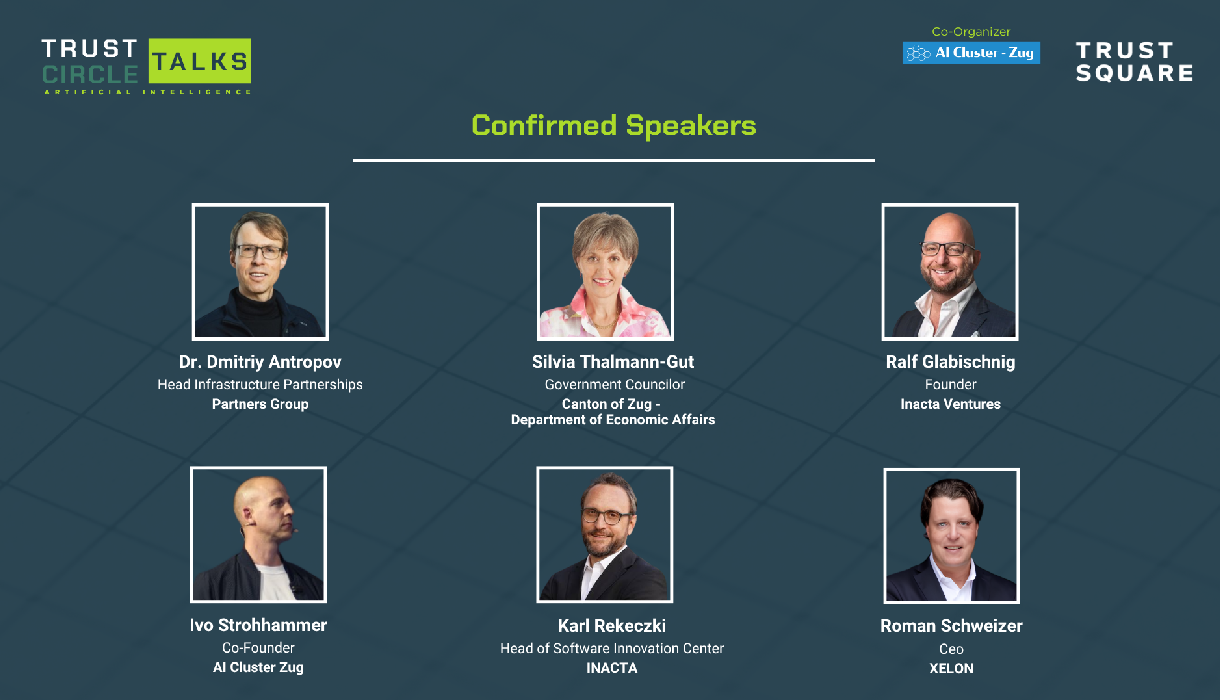
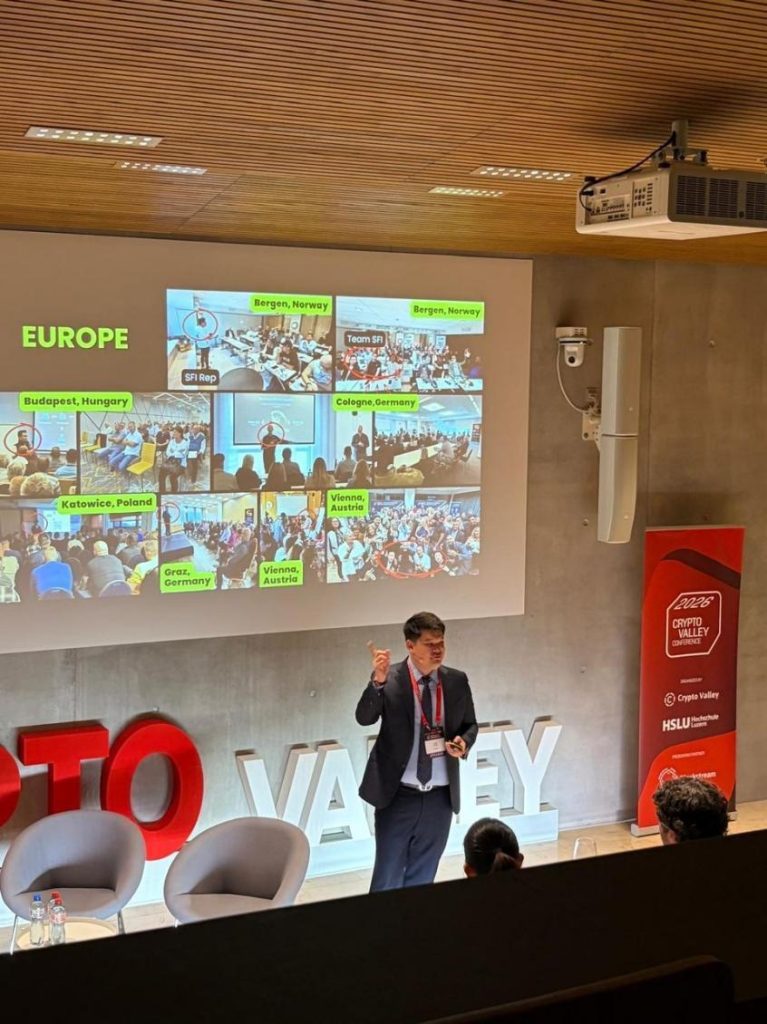
This transition was a defining theme at the 2026 Crypto Valley Conference (CVC), one of Europe’s most prominent gatherings for blockchain innovation, digital finance, and emerging technologies. Hosted in Switzerland’s Crypto Valley, the event brought together institutional investors, regulators, infrastructure providers, and leading Web3 and fintech companies to explore the next stage of digital asset evolution.
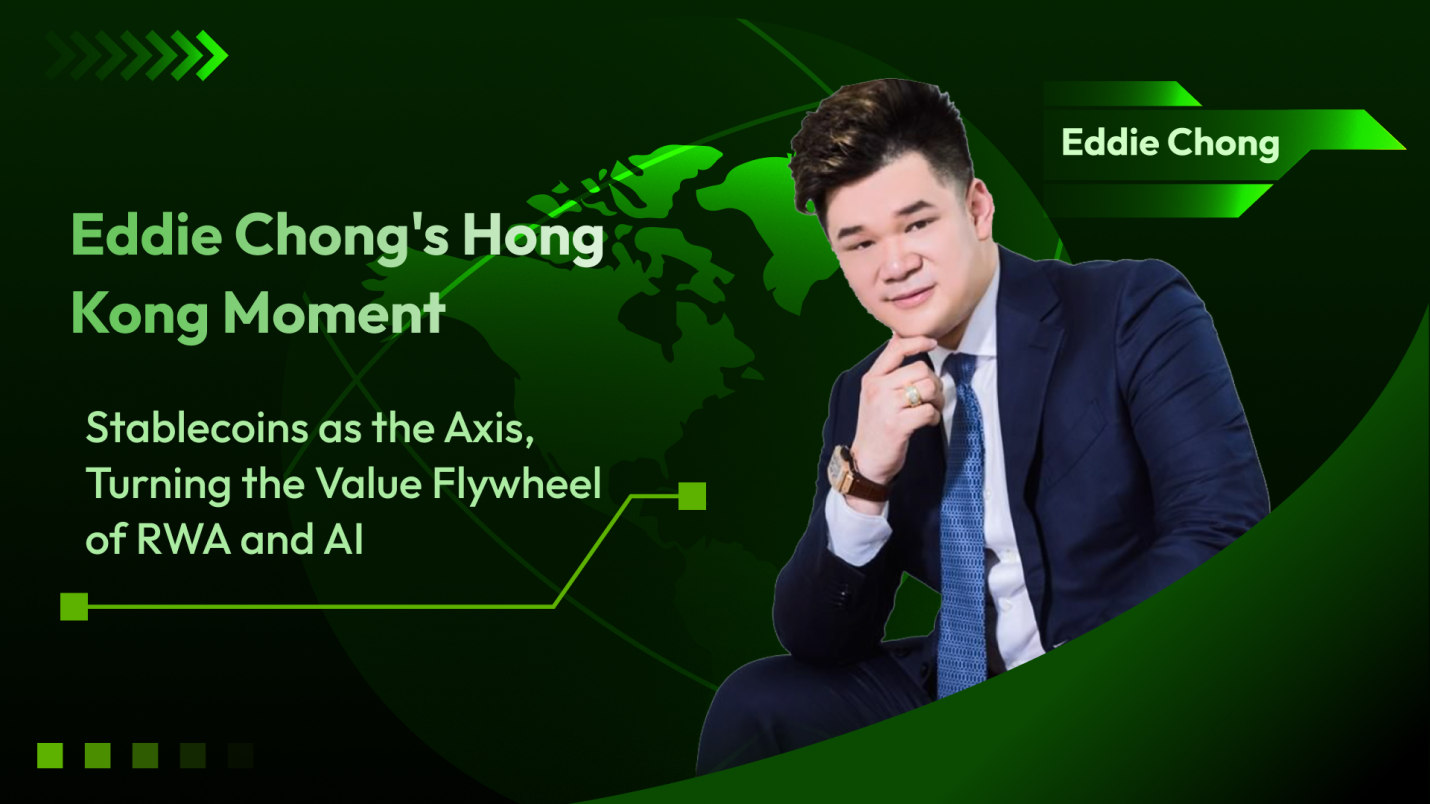
Among the speakers shaping discussion at this year’s conference was Eddie Chong, Chairman and CEO of SFI Group. His keynote addressed a growing concern across the industry: while technology continues to advance rapidly, the foundations of trust and liquidity remain underdeveloped.
Chong argued that the next phase of blockchain growth will not be driven by narratives or innovation alone, but by systems capable of delivering compliance, transparency, and real-world utility at scale.
The Core Challenge: Trust and Liquidity in Digital Assets
In his presentation titled “Back to the Fundamentals: The Crisis of Trust – Why Liquidity is Dying and How We Must Evolve,” Chong highlighted what he described as a structural imbalance in today’s digital asset markets.
Despite progress in tokenization, decentralized finance, and AI-enabled blockchain applications, many ecosystems continue to struggle with limited liquidity and uneven institutional participation.
According to Chong, the root cause is not technological limitation but a trust deficit shaped by several persistent issues:
- Fragmented regulatory environments across jurisdictions
- Inconsistent standards for digital asset compliance
- Limited real-world utility for many tokenized instruments
- Lack of integrated infrastructure connecting payments, assets, and users
These challenges, he noted, restrict capital flow and reduce the ability of blockchain systems to scale beyond niche participation.
Web4: A Transition Toward Autonomous Digital Economies
A central theme of Chong’s keynote was the concept of Web4, which he described as the next evolution of digital infrastructure.
Unlike earlier iterations of the web that primarily focused on human-driven interaction, Web4 envisions a hybrid economy where artificial intelligence systems act as independent economic participants.
In this model, AI agents may eventually be capable of:
- Managing and holding digital assets
- Executing transactions autonomously
- Interacting with financial systems in real time
- Participating in digital commerce without direct human input
However, Chong emphasized that achieving this transition requires more than AI advancement. It depends on the development of reliable financial infrastructure capable of supporting both human users and machine-driven actors.
SFI’s Integrated Infrastructure Approach
During the keynote, Chong outlined SFI’s strategy for addressing these challenges through an interconnected ecosystem that combines payments, tokenization, and artificial intelligence.
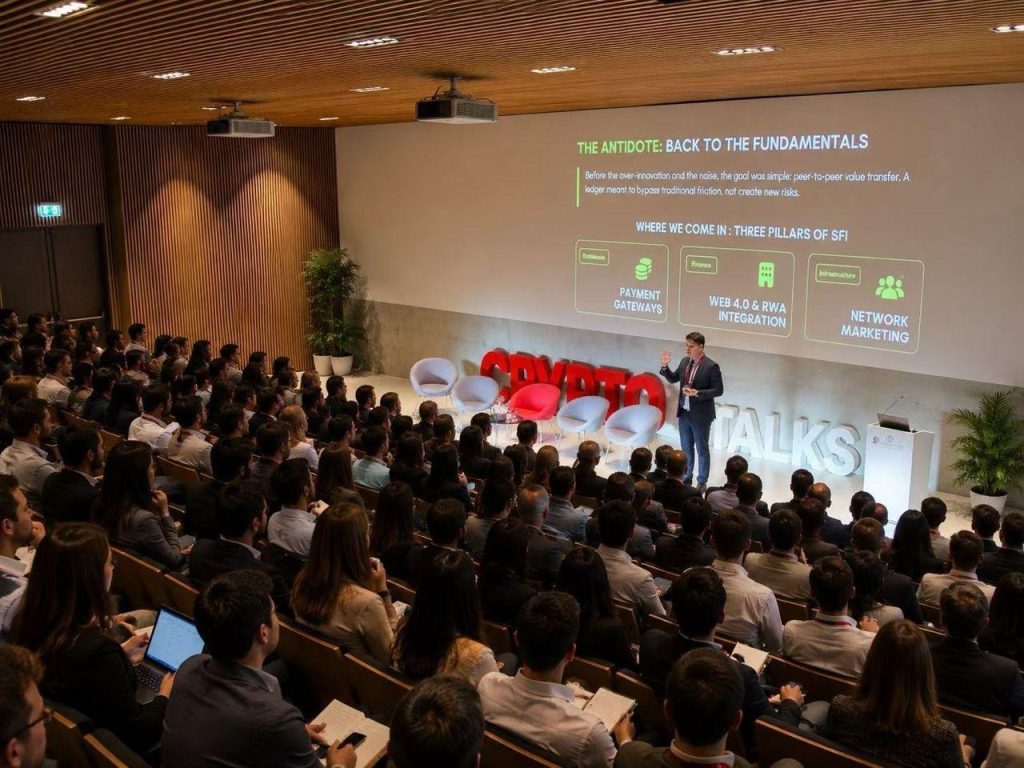
The model is built around three foundational pillars:
- Stablecoins as the transactional backbone of digital finance
- Real-world assets as sources of intrinsic value and yield
- Artificial intelligence as an engine for autonomous economic activity
To operationalize this framework, SFI has developed several integrated platforms.
Solulu Club
A community-driven ecosystem layer reportedly serving more than 200,000 active users, designed to support engagement and network participation.
Solulu Pay
A cross-border payment infrastructure operating in over 100 countries, focused on enabling compliant fiat-to-digital asset transactions.
Caviar
A premium commerce platform that connects digital asset ecosystems with real-world consumption, including partnerships with luxury brands such as Lamborghini and Fendi.
COPX DAO
An AI-powered quantitative trading system designed to introduce algorithmic participation and enhance ecosystem utility.
RWA Incubator & Exchange
A structured platform supporting the lifecycle of tokenized real-world assets, including issuance, management, circulation, and liquidity enablement.
Together, these components form an attempt to build a full-stack Web4 infrastructure layer where financial activity, digital assets, and AI systems operate within a unified environment.
Liquidity as a Function of Utility
A key argument in Chong’s address was that liquidity is not a product of speculation, but of utility.
He stated that sustainable market activity emerges only when ecosystems demonstrate:
- Consistent real-world usage
- Transparent and compliant operations
- Continuous user engagement
- Reliable transaction flows
Without these conditions, even advanced blockchain systems struggle to achieve long-term relevance.
This perspective reflects a broader shift across the industry, where investors and institutions are increasingly prioritizing execution and operational maturity over conceptual innovation.
Institutional Dialogue and Ecosystem Interest
Following the keynote, Chong participated in discussions with institutional stakeholders, infrastructure providers, custodians, and AI-focused technology firms.
Key areas of discussion included:
- Stablecoin settlement infrastructure
- Institutional custody frameworks
- Cross-border payment systems
- AI-driven financial automation
- Regulatory compliance architecture
- Tokenized asset liquidity solutions
The level of engagement underscored growing institutional interest in infrastructure-driven blockchain models capable of supporting regulated, large-scale adoption.
Regulatory Momentum in Switzerland
The conference coincided with new regulatory guidance released in Zug, Switzerland, addressing the evolving real-world asset and tokenization landscape.
The framework outlined expectations around issuance standards, compliance requirements, circulation mechanisms, and cross-border settlement processes.
For industry participants, the announcement reinforced Switzerland’s position as a leading jurisdiction for regulated digital asset development.
Chong noted that clearer regulatory structures are expected to play a key role in accelerating institutional participation and improving market stability.
A Defining Phase for Blockchain Infrastructure
Crypto Valley Conference 2026 highlighted a clear inflection point for the blockchain industry.
The focus is gradually shifting away from short-term speculation and toward infrastructure capable of supporting real-world financial systems. Success is increasingly being defined by regulatory alignment, liquidity depth, and measurable utility rather than narrative-driven growth.
SFI’s presentation reflected this broader transition by emphasizing an integrated model that connects payments, tokenized assets, artificial intelligence, and compliance frameworks into a single operational ecosystem.
As the industry continues to mature, platforms that can bridge digital innovation with traditional financial requirements are likely to play a central role in shaping the next phase of global digital finance.
About SFI
SFI is a Web4 infrastructure company focused on integrating stablecoin payments, real-world asset tokenization, artificial intelligence systems, and compliance-driven financial architecture. Through platforms such as Solulu Club, Solulu Pay, Caviar, COPX DAO, and its RWA initiatives, the company aims to build a unified ecosystem for the next generation of digital economic activity.
Follow the SFI Ecosystem:
SFI: https://x.com/SFI_AI
SoluluPay: https://x.com/SoluluPay
Caviar: https://x.com/shopcaviar
COPX DAO: https://x.com/Copx_DAO
Company Name(公司名): SFI
Contact Person(联系人): Davil Lin
Email(邮箱):[email protected]
State(地区): Kuala Lumpur
Country(国家): Malaysia
Website(网站):https://solulu.club/